
Move Safely Every Day — Mobility Guides for Seniors
Activeageflow provides carefully researched, easy-to-follow guides on safe movement and mobility for older adults across the United States. Our editorial team brings together expert-reviewed information to help seniors stay active, confident, and independent at every stage of life.
Safety-Focused
Expert-reviewed content
Looking for fall prevention strategies? Explore our curated movement articles. Read Guides
Why Senior Mobility Awareness Matters
Understanding the challenges older adults face with movement is the first step toward building a safer, more active daily life.
Falls Are Preventable
Most falls among older adults are not inevitable — they are often linked to avoidable risk factors that can be identified and reduced through informed movement habits.
Movement Supports Mental Clarity
Regular, safe physical activity has been widely recognized to support cognitive function and emotional well-being in older adults, making mobility a whole-body priority.
Independence at Home
Good mobility practices allow seniors to remain in their own homes longer, performing daily tasks with confidence and reducing reliance on outside assistance.
Community Stays Stronger
When seniors move with confidence, they participate more in social activities, community events, and family life — fostering connections that benefit overall quality of life.

Why Safe Movement Matters for Older Adults
As we age, changes in muscle strength, joint flexibility, balance, and coordination naturally occur. These shifts can make everyday activities — walking across a room, navigating stairs, or rising from a chair — feel more demanding and, at times, risky. Understanding these changes is the foundation of safe movement.
At Activeageflow, our editorial team compiles evidence-based information to help seniors and their families recognize common mobility challenges before they become serious problems. Awareness, combined with appropriate daily habits, can dramatically reduce the likelihood of falls and movement-related injuries.
Our guides cover everything from home safety checklists and footwear recommendations to gentle stretching routines and the correct use of walking aids. Every article is written to be accessible, practical, and immediately useful in daily life — no prior fitness experience required.
Read Our Mobility GuidesBuilding a Safe Daily Movement Routine
A consistent and thoughtful approach to movement can be built gradually. Here is the framework our editorial team recommends based on widely recognized best practices for senior mobility.
Assess Your Starting Point
Begin by honestly observing how you currently move through your day. Note any moments of unsteadiness, pain, or hesitation — for example, on stairs, in narrow doorways, or when getting in and out of chairs. This personal awareness is the essential first step before introducing any new movement habits.
Make Your Environment Safer
Walk through your home looking for hazards: loose rugs, poor lighting, slippery bathroom floors, or furniture that blocks clear pathways. Small adjustments — grab bars near the toilet, non-slip mats in the shower, nightlights in hallways — can make a significant difference in reducing fall risks before you even start exercising.
Start with Short, Gentle Sessions
Introduce movement gradually with sessions of just 10 to 15 minutes a day. Simple seated leg lifts, gentle heel-to-toe walking, or slow marching in place are excellent starting points. Consistency matters more than intensity — daily short sessions build strength and balance far more effectively than infrequent long ones.
Add Balance and Strength Work
Once comfortable with daily movement, incorporate specific balance exercises such as standing on one foot while holding a sturdy chair, or side-step walking along a wall. Light resistance work — like squeezing a resistance band from a seated position — builds the muscle support needed to move safely and confidently outdoors.
Track Progress and Adjust
Keep a simple daily log of your movement sessions — even jotting down a few words about how you felt is enough. Over time, you will notice patterns: which activities feel easier, where you still feel uncertain, and when to gently challenge yourself. This self-monitoring builds long-term motivation and helps you adjust your routine wisely.
Stay Social and Consistent
Movement is more enjoyable and sustainable when shared. Join a local walking group, invite a neighbor for a daily stroll, or connect with a family member who can follow the same routines with you. Social accountability is one of the strongest predictors of long-term consistency in senior activity programs.
Essential Mobility Aids and Tools Seniors Should Know About
Understanding the right tools available for safe movement can make a meaningful difference in daily independence. Our guides explore each of these topics in detail.
Walking Canes and Staffs
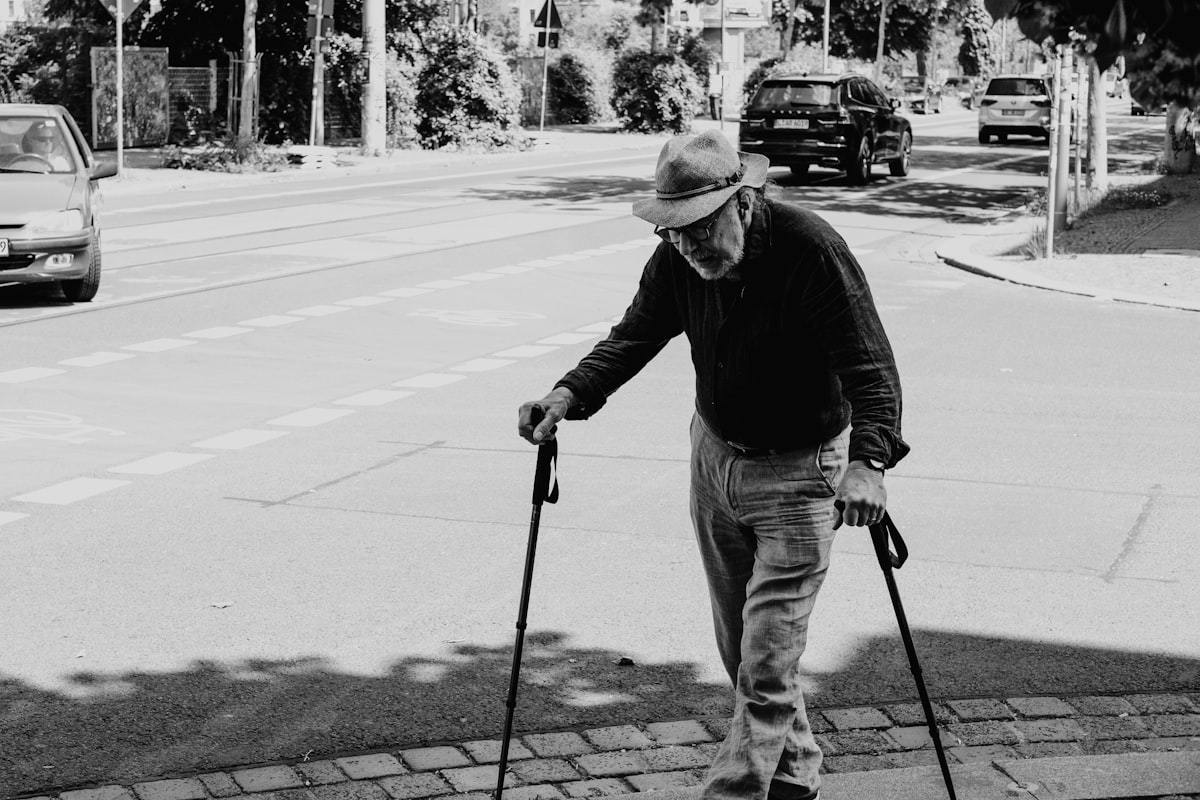
A properly fitted walking cane can significantly reduce the risk of falls on uneven surfaces, stairs, and in unfamiliar environments. Our editorial content covers how to choose the right height, grip style, and material for your needs — and explains when a quad cane or forearm cane may be more appropriate than a standard single-point cane.
Read the guideRollators and Walkers
For seniors who need broader support, rollators and walkers offer stability with each step. Our guides explain the difference between standard walkers and wheeled rollators, how to adjust handle height correctly, and safety habits to follow when navigating curbs, ramps, and doorways to minimize risk of tipping or slipping.
Read the guideSupportive Footwear
Footwear is one of the most overlooked factors in senior fall prevention. Shoes with firm heel counters, non-slip rubber soles, and a low, wide heel provide a stable base for every step. Our footwear guide outlines what to look for when shopping, which styles to avoid (including certain slippers and high-heeled shoes), and how to assess current shoes for risk.
Read balance tipsGrab Bars and Home Rails
Strategically placed grab bars in bathrooms, near beds, and along stairwells are among the most impactful home modifications available. Our articles detail the recommended mounting heights for grab bars in showers and beside toilets, suitable wall anchor types, and the difference between temporary suction-cup models and permanently installed versions for various living situations.
Read the guideResistance Bands for Seniors
Resistance bands are low-cost, portable, and highly versatile tools for building leg and upper-body strength without putting undue stress on joints. Our content explains how to use them safely from a seated or standing position, which resistance levels are appropriate for beginners, and how to progress gradually without overexertion or improper form.
Read the guidePersonal Emergency Response Systems
Wearable alert devices give seniors and their families peace of mind during solo movement at home or outdoors. These small buttons or wristbands allow users to call for help immediately after a fall. Our overview articles compare popular systems available in the U.S., explain key features to look for, and offer tips on how to wear them consistently so they are always available when needed.
Explore tipsExplore Our Full Movement Library
Browse all of our senior-focused movement and safety articles — organized by topic, difficulty, and daily living scenario.
View All GuidesFrequently Asked Questions About Senior Mobility
Our editorial team has compiled answers to the questions we hear most often from readers about safe movement, fall prevention, and building a sustainable active routine.
How much movement per day is safe for seniors?
Most widely referenced guidelines suggest that older adults aim for at least 150 minutes of moderate-intensity movement per week, broken into shorter sessions throughout the day. However, starting with just 10 to 15 minutes at a time is appropriate for those who have been inactive or who are managing balance challenges. The key is to begin gently and increase duration gradually over several weeks.
What are the most effective balance exercises for beginners?
For beginners, the most accessible balance exercises include heel-to-toe walking in a straight line along a wall, standing on one foot while holding a sturdy chair back, and slow side-step walking. These exercises directly train the stabilizing muscles of the ankles, hips, and core — the primary systems responsible for preventing stumbles during ordinary daily activities like walking on uneven ground or reaching overhead.
Are seated exercises as beneficial as standing ones?
Yes — for many seniors, especially those who are rebuilding strength after a period of low activity, seated exercises are a highly effective and safe place to begin. Chair-based leg lifts, seated marching, upper-body reaches, and ankle circles all build meaningful strength and circulation. Seated routines also allow people with certain balance concerns to exercise with far lower fall risk while still making genuine progress.
How do I stay motivated to exercise consistently as I get older?
Motivation thrives on variety, social connection, and visible progress. Try scheduling workouts at the same time each day to build habit, keep a simple journal to track improvements, and mix up your routine every few weeks to keep things fresh. Exercising with a friend, joining a class, or following along with a program like Activeageflow adds accountability and enjoyment. Celebrating small wins — an extra rep, a longer walk, improved balance — keeps the momentum going far more sustainably than chasing dramatic results.
Is strength training safe for people over 70?
Absolutely — in fact, resistance training is one of the most evidence-backed interventions for healthy aging at any age. Adults over 70 can safely build muscle, improve bone density, and enhance functional independence through carefully designed strength programs. The key is starting with manageable resistance, prioritising good form over heavy loads, and progressing gradually. Bodyweight exercises, resistance bands, and light dumbbells are all excellent tools. Always get clearance from your doctor if you have existing health conditions, and work within a structured programme designed with your age group in mind.
What role does nutrition play alongside exercise for older adults?
Nutrition and exercise work hand in hand. Adequate protein intake — typically 1.2–1.6 g per kilogram of body weight daily — supports muscle repair and growth, making it especially important after strength sessions. Staying well hydrated aids joint lubrication, energy levels, and recovery. A diet rich in colourful vegetables, whole grains, healthy fats, and lean proteins provides the micronutrients needed for bone health, immune function, and sustained energy. Small, balanced meals spread throughout the day tend to support steady energy better than infrequent large meals. Consulting a registered dietitian can help tailor guidance to individual needs.